
PM Sharif Attends Shenzhen Business Forum, Promises Comprehensive Support to Chinese Investors
ISLAMABAD: On Wednesday, Prime Minister Shehbaz Sharif assured Chinese investors of his administration’s unwavering support as Pakistan endeavors to attract foreign investments to stabilize its $350 billion economy.
Addressing a joint business forum in Shenzhen, a major global tech hub, Sharif emphasized the importance of collaboration. His visit, from June 4-8, focuses on business-to-business engagements and enhancing the China-Pakistan Economic Corridor (CPEC), a crucial part of President Xi Jinping’s Belt and Road Initiative. Since 2015, Beijing has invested over $60 billion in Pakistan’s energy and infrastructure sectors. Islamabad now aims to expand CPEC projects into the industrial, IT, and agricultural sectors, promoting private sector and B2B interactions.
Approximately 79 Pakistani companies are participating in the Shenzhen forum. Sharif encouraged both Pakistani and Chinese executives to seize this opportunity for productive discussions and partnerships.
“Today is the opportunity, today is the time,” Sharif stated. “Capture this moment, engage with our Chinese counterparts, and forge meaningful collaborations. As the prime minister and CEO of Pakistan, I pledge unparalleled support to ensure mutual benefits for Pakistani and Chinese businesses.”
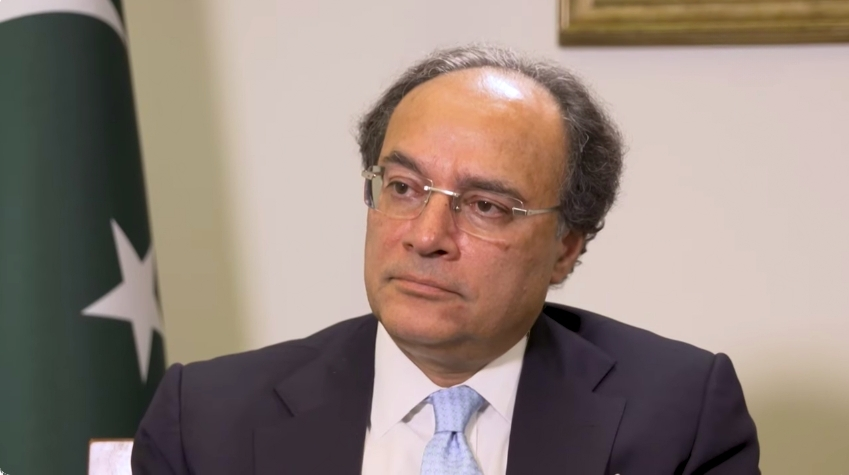
Federal Minister for Finance and Revenue Muhammad Aurangzeb also addressed the forum, outlining the government’s strategy for export-led growth and the role of special economic zones. Aurangzeb highlighted Pakistan’s pursuit of foreign direct investment through both governmental and business collaborations and plans to access international capital markets and Panda Bonds, Renminbi (RMB)-denominated bonds issued by non-Chinese entities in China.
Aurangzeb acknowledged recent payment and repatriation challenges faced by Chinese companies but assured that these issues would be resolved soon.
Earlier, Prime Minister Sharif met Zhu Zhaojiang, founder and chairman of Transsion Holdings, a Chinese multinational specializing in mobile phone manufacturing. Zhu expressed interest in expanding investments in Pakistan, particularly in mobile manufacturing, electric bikes, modern agriculture, and fintech sectors. Sharif directed federal ministers and Pakistan’s ambassador to China to develop a swift action plan for Transsion, encouraging local production and increased exports, leveraging Pakistan’s young workforce.
During the meeting, Zhu briefed Sharif on Transsion’s current operations in Pakistan, its global export activities, and future investment plans, including a unit employing over 5,000 Pakistani nationals.
Sharif will also meet President Xi Jinping and other senior officials in Beijing before concluding his five-day visit on June 8. This visit underscores Pakistan’s efforts to stabilize its economy through investment rather than borrowing, seeking mutually beneficial collaborations with key allies like China.
Chinese financial support since 2013 has been vital for Pakistan, including loan rollovers to help Islamabad manage its external financing needs amidst critically low foreign reserves.